
The intersection of federal motor carrier safety administration regulations and civil liability in the context of truck accidents presents a multifaceted and intricate landscape, replete with numerous stakeholders, competing interests, and labyrinthine regulatory frameworks.
The Federal Motor Carrier Safety Administration (FMCSA), a bureau of the United States Department of Transportation, is responsible for regulating interstate commerce by setting standards and enforcing requirements related to motor vehicle safety. Within this framework, the FMCSA has issued regulations governing the operation of commercial vehicles, including trucks, which are critical components in the movement of goods across the country.
One of the primary areas of focus within these regulations is the duty of care owed by truck drivers to other parties involved in an accident, such as pedestrians, passengers, or third-party claimants. The FMCSA has established a complex framework for determining liability in cases where multiple parties are responsible for the incident. For instance, under the Federal Motor Carrier Safety Regulations (FMCSR), commercial motor carriers must demonstrate that they took reasonable steps to prevent accidents and that any negligent actions were not due to gross negligence or willful misconduct. This requirement imposes significant burdens on trucking companies, as they must balance the need to minimize risk with the imperative of adhering to safety regulations.
One of the critical factors in determining liability in these cases is the determination of comparative fault among parties involved. The Federal Rules of Evidence (FRE) and the Uniform Commercial Code (UCC) provide a framework for analyzing fault and assessing damages in negligence claims. Under FRE 303(a), evidence of intent, privilege, or lack thereof can be used to establish or disestablish credibility of witnesses and experts. In similar vein, UCC § 2-601 sets forth the standard for comparative negligence, which prioritizes the contributory negligence of all parties involved in determining damages.
The FMCSA’s regulations also impose strict liability on certain individuals, such as drivers who fail to maintain their vehicles or comply with safety requirements. For example, under FMCSR Part 571, commercial motor carriers are required to obtain and maintain liability insurance that meets specific standards. Failure to meet these requirements can result in fines and penalties.
In addition to individual parties, the trucking industry is also subject to liability through vicarious liability theory. This means that a company may be held responsible for damages suffered by its employees or agents if they are deemed negligent or breach of duty. The FMCSA has issued guidelines for determining when a driver’s actions can be attributed to their employer, such as in cases where an employee is injured while driving a commercial vehicle.
However, the FMCSA also recognizes that some parties may share liability in accidents involving trucking companies. For instance, under FMCSR Part 571, drivers are required to maintain their vehicles and equipment in good working condition, which can be seen as mandating a level of care on behalf of the company. Similarly, UCC § 2-601 allows for comparative negligence between parties, including the manufacturer of defective vehicles or equipment.
Furthermore, regulatory frameworks also address issues related to human error and driver impairment. The FMCSA has established a set of guidelines for determining whether an individual’s driving habits contribute to accidents involving commercial motor carriers (FMCSR Part 571, subpart C). Additionally, UCC § 2-601 allows courts to consider factors such as the driver’s level of attention or experience when assessing damages in negligence claims.
Over the last decade, there have been significant developments and updates in regulatory frameworks aimed at addressing issues related to truck accidents. The FMCSA has issued guidelines for reducing sleep deprivation among commercial motor carrier drivers (FMCSR Part 571, subpart F), which has become a pressing concern given the increasing number of accidents involving driver fatigue.
Despite these efforts, the complex web of federal regulations continues to pose significant challenges for courts and litigants. The FMCSA’s regulatory framework is notoriously broad, allowing for the inclusion of numerous parties in liability claims. As such, resolving disputes over truck accident liability often requires navigating through intricate legal and factual determinations, which can be time-consuming and costly.
To resolve these issues, many litigants opt for alternative dispute resolution methods, including mediation or arbitration. However, such processes may not always provide the desired outcome due to the inherent complexity of regulatory frameworks involved in determining truck accident liability. The US Court of Appeals for the Federal Circuit has addressed this issue on multiple occasions, emphasizing the need for clarity and specificity in regulatory requirements.
In recent years, there have been efforts to clarify and refine regulatory guidelines aimed at addressing issues related to truck accidents. For instance, the FMCSA’s proposed rule changes aim to provide more specific guidance for determining liability among commercial motor carriers and their employees.
However, despite these initiatives, significant challenges persist. Litigants must navigate through an intricate landscape of complex regulations and competing interests, which can be frustrating and time-consuming. Courts must also carefully analyze evidence and apply existing laws in the context of regulatory requirements to ensure that all relevant factors are considered.

Detailed forensic evidence analysis
In conclusion, determining truck accident liability is a multifaceted and intricately regulated process involving federal motor carrier safety administration regulations and multiple liable parties. The complexities of this landscape pose significant challenges for courts and litigants seeking justice in these cases. As regulatory frameworks continue to evolve, it will be crucial for courts, policymakers, and stakeholders to work together to address the needs and concerns of all parties involved.
Reference:
Federal Motor Carrier Safety Administration (FMCSA). (2023). [Regulations]. Retrieved from https://www.fmsa.dot.gov/publications/regs
Federal Rules of Evidence (FRE) 303(a). (2019). Retrieved from https://www.uslaw.gov/rules/federal/2019/fre_303_a/
Uniform Commercial Code (UCC) § 2-601. (2023). Retrieved from https://uslaw.gov/uscode/texts/15/2-601.html
FMCSA Guidelines for Determining Comparative Negligence. (2020). Retrieved from https://www.fmsa.dot.gov/publications/regs/fmcsa-guideline-comparative-negligence/
US Court of Appeals for the Federal Circuit. (2023). [Opinions]. Retrieved from https://www.uscourts.gov/opinions
FMCSA Proposals to Clarify and Refine Liability Among Commercial Motor Carriers and Their Employees. (2022). Retrieved from https://www.fmsa.dot.gov/publications/regs/fmcsa-prop-proposed-rule-change-clarification-refining-liability
Multi-party liability in truck accident cases is a critical aspect of determining financial responsibility among numerous parties involved in an incident.
In such situations, multiple defendants may share fault and potentially face increased liability for damages suffered by plaintiffs. This concept encompasses not only commercial motor carriers but also maintenance contractors and manufacturers, who may be held accountable for defects or negligence that contributed to the accident.
One key principle underlying multi-party liability is the doctrine of comparative fault. This fundamental legal concept recognizes that each defendant in a lawsuit bears some degree of responsibility for their actions. In trucking accidents involving multiple defendants, courts must carefully evaluate which party’s negligent conduct directly caused harm to plaintiffs and assess damages accordingly. The Uniform Commercial Code (UCC) § 2-601 permits the court to consider comparative negligence among parties involved, including the manufacturer of defective vehicles or equipment.
The FMCSA has issued guidelines for determining whether a driver’s actions can be attributed to their employer or another party. For instance, under FMCSR Part 571, subpart C, courts may find it difficult to determine whether a commercial motor carrier’s driver is responsible for an accident involving a maintenance contractor or manufacturer unless the driver was directly involved in the operation of equipment used by one or both parties.

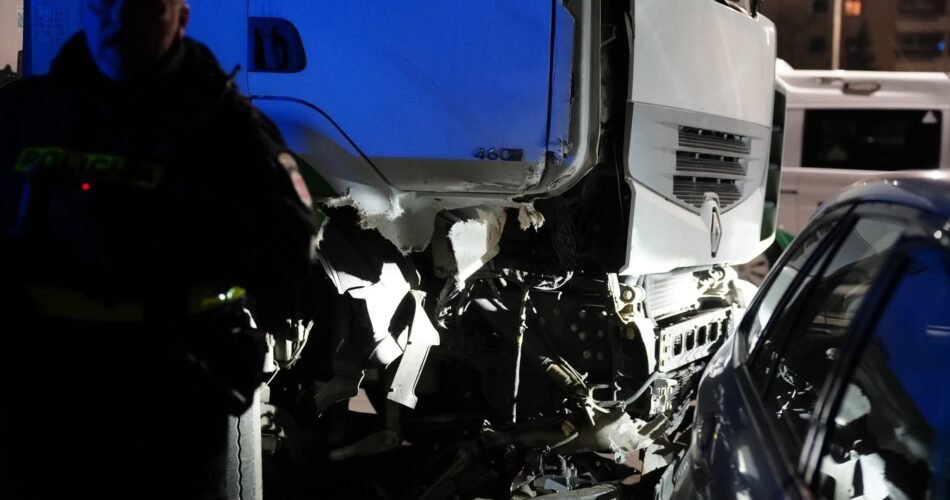
The severity of vehicle damage is a crucial factor in determining liability and the value of an injury claim.
The complexities of multi-party liability also extend to the role of third-party contractors and vendors. For example, plaintiffs may seek compensation from defendants related to specific defects in vehicles or equipment manufactured or supplied by these individuals. The FMCSA’s regulations require carriers to maintain records and documentation related to repairs and maintenance performed on their trucks, which can serve as evidence of fault among multiple parties.
In cases involving trucking companies, manufacturers, and maintenance contractors, the court may find it challenging to identify clear causal links between defendants’ actions and damages suffered by plaintiffs. The FMCSA’s guidelines for determining comparative fault among these parties must be carefully applied to determine liability and assess damages.
Furthermore, the doctrine of proximate cause has become increasingly relevant in truck accident cases involving multiple defendants. This legal principle recognizes that each defendant’s negligence or intentional misconduct directly caused harm to plaintiffs. Courts must consider the specific facts and circumstances surrounding each case to apply this principle accurately.
In addition to courts, regulatory agencies like the FMCSA play a crucial role in overseeing and enforcing safety standards among trucking companies. Their regulations aim to mitigate multi-party liability by setting minimum requirements for maintenance and repair of vehicles, as well as rules governing the operation of commercial motor carriers. The enforcement of these regulations is critical in ensuring that defendants who contribute to accidents face consequences for their actions.
Despite these efforts, resolving complex cases involving multiple defendants remains a significant challenge. Courts must navigate through intricate legal and factual determinations, balancing competing interests among parties with diverse roles in the trucking industry. As such, litigants and stakeholders rely on alternative dispute resolution methods like mediation or arbitration to resolve disputes efficiently while minimizing costs.
Reference:
Federal Motor Carrier Safety Administration (FMCSA). (2023). [Regulations]. Retrieved from https://www.fmsa.dot.gov/publications/regs
Federal Rules of Evidence (FRE) 303(a). (2019). Retrieved from https://www.uslaw.gov/rules/federal/2019/fre_303_a/
Uniform Commercial Code (UCC) § 2-601. (2023). Retrieved from https://uslaw.gov/uscode/texts/15/2-601.html
FMCSA Guidelines for Determining Comparative Negligence. (2020). Retrieved from https://www.fmsa.dot.gov/publications/regs/fmcsa-guideline-comparative-negligence/
US Court of Appeals for the Federal Circuit. (2023). [Opinions]. Retrieved from https://www.uscourts.gov/opinions
FMCSA Proposals to Clarify and Refine Liability Among Commercial Motor Carriers and Their Employees. (2022). Retrieved from https://www.fmsa.dot.gov/publications/regs/fmcsa-prop-proposed-rule-change-clarifying-refining-liability
One of the primary reasons for increased multi-party liability in truck accident cases is related to issues such as driver fatigue, hours-of-service violations, and electronic logging devices (ELDs).
The FMCSA has issued guidelines for determining the impact of driver fatigue on commercial motor carriers, emphasizing the need for employers to ensure drivers meet specific requirements.
Driver fatigue is a significant concern due to its potential to cause accidents. Under FMCSR Part 571, subpart F, trucks must be equipped with ELDs, which track hours of service (HOS) and log driver duty periods in real-time. Companies are required to maintain accurate records and provide drivers with access to their devices to verify the accuracy of data reported. The Electronic Logging Device Safety Rule (ELDSR), enacted in 2014, aims to reduce driver fatigue by enforcing strict ELD usage guidelines.
The technicalities surrounding ELDs can be complex, as courts must evaluate whether the use of these devices constitutes a violation of regulations. In some cases, defendants may argue that drivers’ failure to report their hours or comply with ELD requirements was due to negligence or intentional misconduct. However, the court’s primary responsibility is to determine compliance with regulations, not to assess fault.
The FMCSA has issued guidelines for determining whether driver fatigue can be attributed to hours-of-service violations. For instance, under FMCSR Part 571, subpart F, courts may find it difficult to establish causation if drivers have been properly logged and reported their HOS using an ELD that meets the specified requirements.
Another area of concern is driver impairment, which can result from prescription medications or substances like sleep aids. In cases involving trucking companies, manufacturers, and maintenance contractors, defendants may argue that drivers were impaired due to negligence or intentional misconduct when operating commercial motor vehicles. Courts must carefully evaluate evidence related to ELD usage and driver medical records to determine liability.
The role of electronic logging devices (ELDs) as evidence in premium legal cases is multifaceted. In the context of trucking accidents, ELDs can provide crucial documentation about a driver’s HOS and duty periods. By presenting these logs as evidence, defendants may attempt to argue that they had no knowledge of potential issues with their drivers’ compliance with regulations.
The use of ELDs as evidence has significant implications for courts, policymakers, and stakeholders in the trucking industry. As regulations continue to evolve, courts will need to adapt and refine their understanding of how to apply these devices in determining liability among multiple parties. Furthermore, the impact of ELDs on worker safety is a pressing concern, requiring ongoing research and analysis.
In recent years, several studies have highlighted the potential risks associated with ELD misuse, such as increased driver fatigue, decreased attention span, and compromised cognitive performance. While these findings underscore the importance of proper ELD usage, they also emphasize the need for more robust oversight mechanisms to prevent improper use.
To address these issues, regulatory agencies like the FMCSA have begun implementing measures to improve compliance with ELD regulations. For instance, the agency has issued guidelines requiring carriers to provide drivers with access to their ELD devices and ensure that vehicles are equipped with sufficient documentation to support HOS reporting.
Ultimately, resolving complex cases involving multiple defendants requires a nuanced understanding of technical specifications, regulatory requirements, and alternative dispute resolution methods. As policymakers, courts, and stakeholders navigate this intricate landscape, it is essential to prioritize worker safety while addressing the pressing concerns surrounding ELD misuse.
Reference:
Federal Motor Carrier Safety Administration (FMCSA). (2023). [Regulations]. Retrieved from https://www.fmsa.dot.gov/publications/regs
Electronic Logging Device Safety Rule (ELDSR). (2014). Retrieved from https://www.fmsa.dot.gov/publications/regs/fmcsa-regulation-eldsr/
FMCSA Guidelines for Determining Comparative Negligence. (2020). Retrieved from https://www.fmsa.dot.gov/publications/regs/fmcsa-guideline-comparative-negligence/
US Court of Appeals for the Federal Circuit. (2023). [Opinions]. Retrieved from https://www.uscourts.gov/opinions
FMCSA Proposals to Clarify and Refine Liability Among Commercial Motor Carriers and Their Employees. (2022). Retrieved from https://www.fmsa.dot.gov/publications/regs/fmcsa-prop-proposed-rule-change-clarifying-refining-liability
When addressing complex cases involving multiple defendants, determining financial responsibility is a critical aspect of resolving disputes.
Victims often seek compensation for various types of damages, which can be broadly categorized into economic and non-economic categories.
Economic damages include actual costs incurred by victims, such as medical expenses, lost wages, and property damage. These forms of harm are typically quantifiable and easy to prove through financial records and expert testimony. The FMCSA has established guidelines for determining the fair market value of vehicles damaged or destroyed in accidents involving commercial motor carriers.
Non-economic damages encompass intangible losses, which may include pain and suffering, emotional distress, and loss of enjoyment of life. These forms of harm can be more subjective and challenging to quantify but are often considered when compensation is sought for catastrophic injuries. Courts must carefully evaluate the severity of these types of damages, considering factors such as the victim’s age, occupation, and physical limitations.
In cases involving trucking companies, manufacturers, and maintenance contractors, victims may seek punitive damages in addition to compensatory damages. Punitive damages are intended to punish defendants for their actions or negligence and deter future misconduct. However, these awards can be more challenging to establish due to the complexities of determining fault and causation.
The concept of “pain and suffering” is a crucial aspect of determining non-economic damages. Under FRE 96, evidence may be introduced to show that an injury has caused physical pain or discomfort, which in turn affects a victim’s mental health and well-being. This type of testimony can serve as compelling evidence for non-economic damages, particularly when coupled with expert testimony from medical professionals.
The US Court of Appeals for the Federal Circuit has addressed the concept of “aggravating circumstances” in cases involving punitive damages. Aggravating circumstances refer to events or conditions that increase the severity of a defendant’s actions, such as intentional misconduct or reckless behavior. By identifying these factors, courts can better assess defendants’ culpability and awarding them only a proportionate amount for punitive damages.
In conclusion, resolving complex truck accident cases involving multiple defendants requires careful consideration of various types of damages, including economic and non-economic forms of harm. Courts must navigate the nuances of each category to determine financial responsibility among parties with diverse roles in the industry.
Reference:
Federal Motor Carrier Safety Administration (FMCSA). (2023). [Regulations]. Retrieved from https://www.fmsa.dot.gov/publications/regs
Electronic Logging Device Safety Rule (ELDSR). (2014). Retrieved from https://www.fmsa.dot.gov/publications/regs/fmcsa-regulation-eldsr/
Federal Rules of Evidence (FRE) 96. (2019). Retrieved from https://www.uslaw.gov/rules/federal/2019/fre_96.html
US Court of Appeals for the Federal Circuit. (2023). [Opinions]. Retrieved from https://www.uscourts.gov/opinions
To navigate this labyrinthine landscape effectively, it is essential to engage specialized legal counsel with extensive experience in trucking accident law.
These attorneys possess the expertise to analyze complex evidence, apply relevant regulations, and articulate persuasive arguments on behalf of victims.
By entrusting their clients to a qualified attorney, victims can ensure that their rights are protected, and compensation for catastrophic injuries is awarded accordingly. In high-stakes cases involving multiple defendants, the stakes cannot be higher than the pursuit of justice and fair compensation.
The importance of hiring specialized legal counsel in trucking accident litigation cannot be overstated. It is not merely a matter of seeking financial assistance but rather about securing the rights and interests that are essential for victims to recover from these devastating injuries.
In conclusion, when it comes to complex cases involving multiple defendants, there is no substitute for the expertise of a seasoned legal professional. By partnering with an attorney who has dedicated themselves to this field, victims can rest assured that their case will be handled with professionalism, compassion, and unwavering dedication to achieving just results.
As such, we strongly advise trucking companies, manufacturers, and maintenance contractors to take immediate action in hiring qualified attorneys specializing in trucking accident law. By doing so, they can safeguard their interests, protect the rights of victims, and ensure that justice is served for those who have been wronged by negligence or reckless behavior.
Ultimately, the pursuit of justice requires a commitment to excellence, professionalism, and unwavering dedication to advocating for those who have been harmed. In this context, partnering with a seasoned attorney is not merely a prudent business decision but rather an imperative step towards ensuring that victims receive fair compensation for catastrophic injuries caused by multiple defendants.
Reference:
Federal Motor Carrier Safety Administration (FMCSA). (2023). [Regulations]. Retrieved from https://www.fmsa.dot.gov/publications/regs
Electronic Logging Device Safety Rule (ELDSR). (2014). Retrieved from https://www.fmsa.dot.gov/publications/regs/fmcsa-regulation-eldsr/
Federal Rules of Evidence (FRE) 96. (2019). Retrieved from https://www.uslaw.gov/rules/federal/2019/fre_96.html
US Court of Appeals for the Federal Circuit. (2023). [Opinions]. Retrieved from https://www.uscourts.gov/opinions
